In a world driven by speed, 15-minute meal hacks, and air-fryer shortcuts, there is a quiet rebellion taking place inside home kitchens across the country.
Search queries for “slow Sunday braising,” “Dutch oven comfort meals,” and “mindful autumn cooking” have surged. Home cooks are turning back to one of the oldest, most satisfying culinary traditions: the unhurried Dutch oven supper.
This shift isn’t just about feeding our families—it’s about changing our relationship with time. There is a sacred rhythm in spending a quiet autumn afternoon prepping fresh ingredients, searing a piece of meat, and letting a heavy cast-iron pot simmer gently on the stove for hours while its aroma fills the entire house.
Today, let’s explore why slow cooking is becoming this season’s favorite weekend ritual, followed by a complete step-by-step recipe for a cider-braised pork shoulder with autumn root vegetables.
1. The Art and Science of “Low and Slow” Braising
Braising is the process of cooking tough, flavorful cuts of meat at a low temperature in a small amount of liquid inside a tightly sealed vessel. It turns what could be a tough cut into meltingly tender perfection through four transformative stages:
- Caramelization (The Maillard Reaction): High-heat searing browns the exterior sugars and amino acids, creating deep, complex flavors that form the foundation of your sauce.
- Collagen Breakdown: Over 3 to 4 hours at low temperatures (around 270°F–300°F), tough connective tissue slowly breaks down into gelatin, creating a rich, silky texture without heavy starches.
- Flavor Fusion: Root vegetables, fresh herbs, garlic, and simmer liquids meld together, seasoning the meat from the inside out.
- Kitchen Hospitality: The steady, low simmer releases warm aromas throughout your home, signaling to family and guests that a deliberate, nourishing meal is underway.
2. Recipe: Apple Cider & Rosemary Braised Pork Shoulder
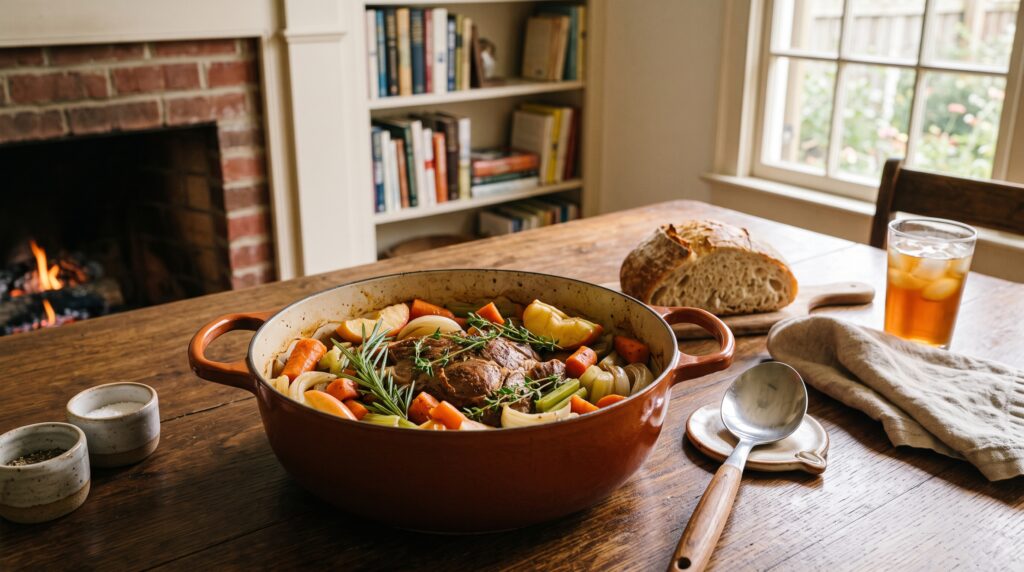
This dish brings together tender pork shoulder, sweet local apple cider, fragrant rosemary, and hearty fall root vegetables for a classic Southern Sunday supper.
Ingredients
- 3.5 to 4 lbs bone-in pork shoulder roast (pork butt)
- 2 tbsp extra-virgin olive oil or bacon fat
- 1 large yellow onion, chopped into thick wedges
- 4 medium carrots, peeled and cut into 2-inch chunks
- 3 stalks celery, sliced into 1-inch pieces
- 4 cloves fresh garlic, smashed
- 1.5 cups fresh, unfiltered apple cider
- 1 cup low-sodium chicken bone broth
- 2 tbsp stone-ground Dijon mustard
- 3 sprigs fresh rosemary & 4 sprigs fresh thyme (tied with twine)
- 2 medium Honeycrisp apples, cored and quartered
- 1.5 tsp sea salt & 1 tsp cracked black pepper
Step-by-Step Instructions
- Preheat & Season: Preheat your oven to 275°F (135°C). Pat the pork roast completely dry with paper towels. Season generously on all sides with sea salt and cracked black pepper.
- Sear the Meat: Heat the olive oil or bacon fat in a 6-quart Dutch oven over medium-high heat. Add the pork shoulder and sear for 3 to 4 minutes per side until a golden-brown crust forms. Transfer the meat to a plate.
- Sauté the Aromatic Base: Reduce heat to medium. Add the onions, carrots, and celery to the pan drippings. Sauté for 5 minutes until softened. Stir in the smashed garlic for 1 minute until fragrant.
- Deglaze the Pot: Pour in the apple cider and bone broth, scraping up all the browned bits from the bottom of the Dutch oven. Stir in the stone-ground mustard.
- Nest & Cover: Nest the seared pork back into the liquid, along with the herb bundle and apple quarters. Cover tightly with the lid and transfer to the preheated oven.
- Braised to Tenderness: Bake for 3.5 to 4 hours, or until the pork shreds easily with two forks. Remove the herb bundle before serving hot with the braised vegetables and pan pan juices spooned over the top.
3. Meal Storage & Reheating Guide
- Refrigerated Storage (In Airtight Glass Containers)
- Shelf Life: Up to 4 days (braised meats taste even better on day two as flavors deepen!).
- Reheating Instructions: Warm in a covered saucepan over medium-low heat with a splash of broth or cider to keep the meat moist.
- Best Serving Suggestion: Serve over a bed of stone-ground white corn grits, buttered egg noodles, or roasted garlic mashed potatoes.
- Freezer Storage Considerations
- Shelf Life: Up to 3 months (freeze the shredded pork directly in its braising liquid to prevent freezer burn).
- Reheating Instructions: Thaw completely in the refrigerator overnight, then reheat gently on the stovetop.
- Leftover Transformation: Shred leftover pork and toss into fall tacos with an apple-cabbage slaw, or layer onto warm sourdough toast for a hearty Monday lunch.
4. Finding Quiet Rhythm in the Kitchen
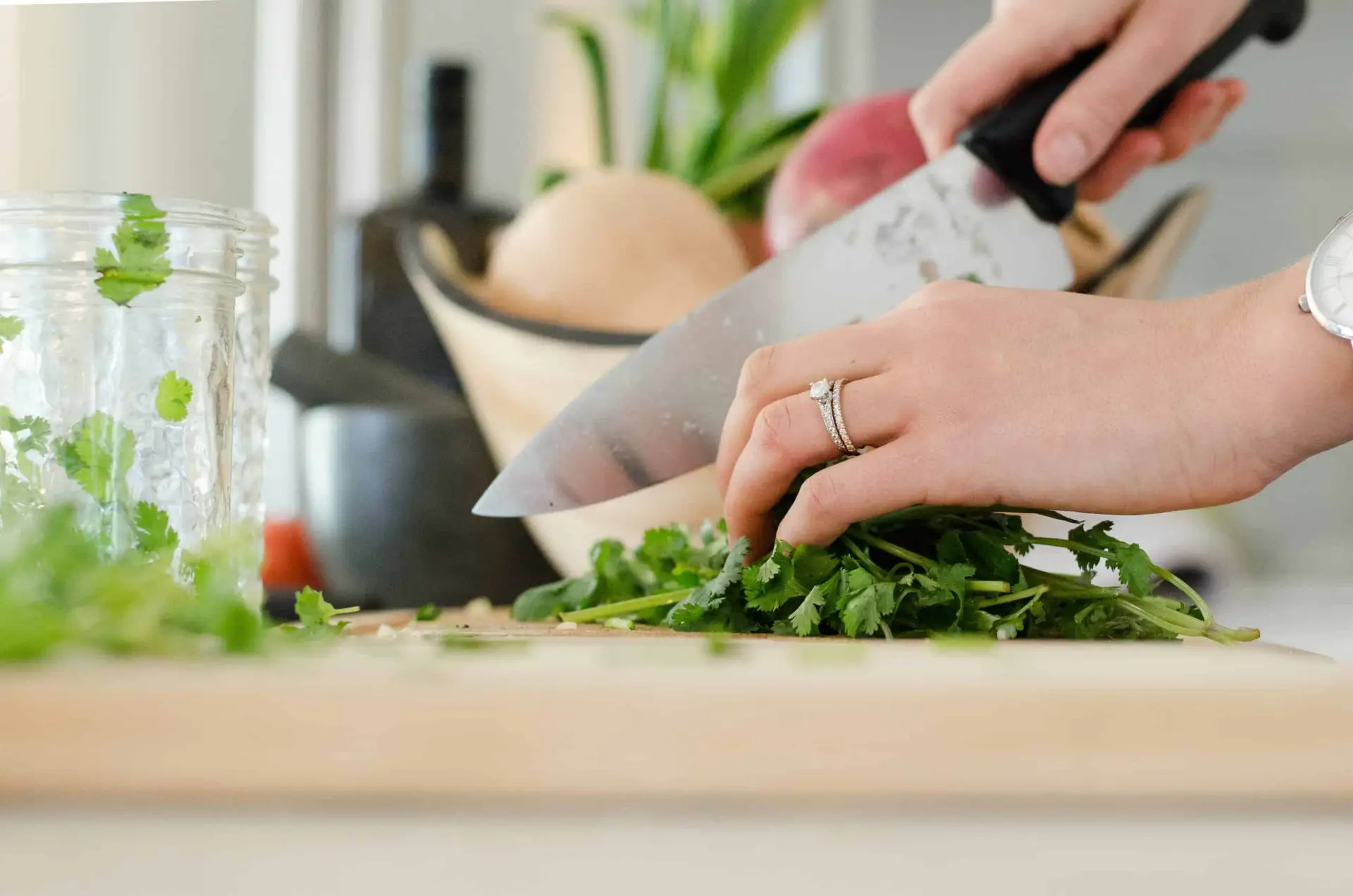
In our fast-paced lives, cooking can easily feel like just another task to check off a busy evening list. But when we choose to slow down—to chop fresh vegetables by hand, listen to a heavy pot simmer on the stove, and let time do the heavy lifting—the kitchen becomes a place of peace.
Slow cooking gives us an opportunity to practice presence. It invites us to pause, welcome our family members home with comforting smells, and gather around the table with gratitude for simple, honest ingredients.
Frequently Asked Questions (FAQ)
What is the best type of Dutch oven for braising?
An enameled cast-iron Dutch oven (like Le Creuset, Lodge, or Staub) is ideal. The heavy cast iron distributes heat evenly and retains temperature, while the tight-fitting lid prevents moisture from escaping during a long oven cook.
Can I make this braised pork in a slow cooker instead?
Yes! Perform Steps 1 through 4 in a heavy skillet to sear the meat and build your flavor base, then transfer everything into your slow cooker. Cover and cook on LOW for 8 to 9 hours for the same tender result.