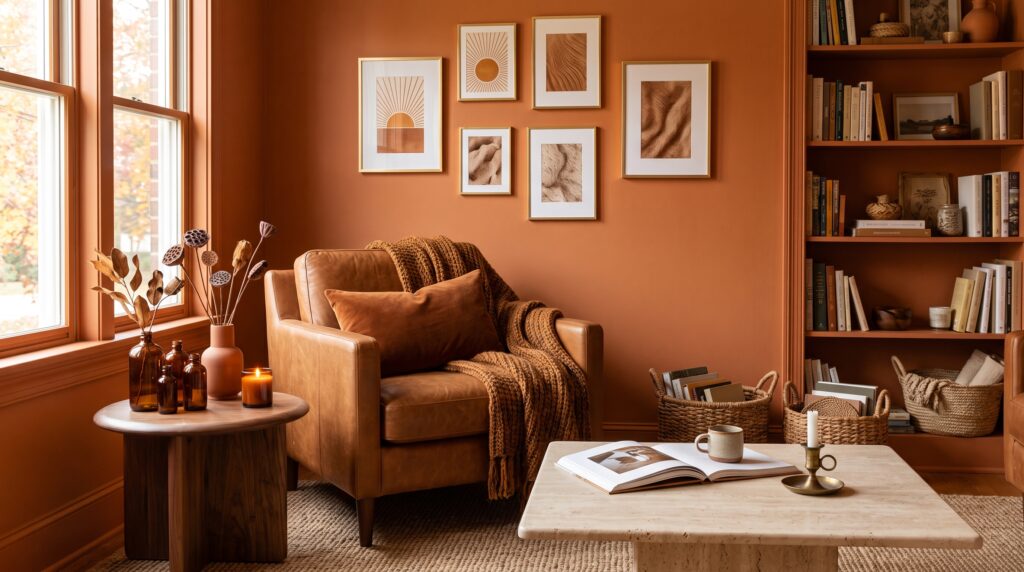
As late-September sunbeams tilt lower across our living rooms, there is a distinct visual turning point. While last autumn saw a massive revival of deep chocolate brown, search queries over the past 24 hours reflect a rich, new evolution.
Search interest for “cinnamon hue decor,” “warm color drenching,” and “spicy autumn palettes” has skyrocketed. Designers and homeowners are gravitating toward mid-tone, orange-infused browns—shades of toasted cinnamon, rich caramel, pipe tobacco, and warm ochre.
These spicier tones strike a perfect balance: they feel deeply grounded and enveloping without pulling a room into darkness. Instead of feeling heavy, a cinnamon-infused room feels like a sunny, warm embrace—the ultimate setting for autumn hospitality and restful evenings.
Today, let’s explore how to introduce these rich, spicy undertones into your home using subtle textiles, natural materials, and the transformative technique of color drenching.
1. Why Cinnamon Hues Are Autumn’s Best Paint & Textile Shift
In interior design, color carries emotional weight. While cool whites and gray tones can leave a space feeling sterile when early sunsets arrive, warm spice tones work with autumn light rather than against it.
- The Power of Warm Undertones: Cinnamon and caramel hues carry golden, orange undertones that mimic late-afternoon sunlight, softening sharp shadows in smaller rooms.
- The “Fifth Wall” Effect: Carrying cinnamon tones overhead across the ceiling (embracing the ceiling as the “fifth wall”) creates a cocoon-like sanctuary ideal for libraries, dining nooks, or bedrooms.
- Versatile Longevity: Unlike artificial bright oranges that feel outdated the day after Halloween, true cinnamon shades transition seamlessly into Thanksgiving and stay cozy all winter long.
2. What Is “Color Drenching” and How Does It Work?
One of the biggest design techniques pairing with cinnamon hues this season is Color Drenching.
Rather than painting three walls white and adding one “accent wall,” color drenching involves painting the walls, baseboards, window trim, doors, and even the ceiling in a single continuous warm shade.
By removing high-contrast white trim lines, visual boundaries disappear. The eye relaxes, making small or shadowy rooms feel instantly larger, cohesive, and deeply intimate.
3. Four Low-Commitment Ways to Bring Cinnamon into Your Home
If you aren’t ready to pull out a paintbrush, you can easily introduce this cozy palette through high-impact, temporary swaps:
- Caramel & Tan Leather Accents: Swap out synthetic pillow covers for a rich caramel leather accent cushion or a vintage tan leather armchair.
- Spicy Linen Lampshades: Replace cold white lamp shades with pleated linen shades in tobacco, ochre, or cinnamon. When lit, they cast a golden, soothing glow.
- Tactile Natural Rugs: Layer a cinnamon-toned wool runner or sisal rug in entryways or hallways to anchor the floor with natural texture.
- Woven Botanical Arrangements: Pair warm cinnamon-colored stoneware vases with real dried foliage, seed pods, or magnolia branches.
4. Creating a Refuge for the Season
Our homes are meant to be living sanctuaries—places where we unburden ourselves from the busyness of the outside world and cultivate rest.
Taking time to warm your living space with inviting colors, soft textures, and gentle lighting isn’t about chasing temporary design fads. It is a thoughtful way to prepare your environment for the season of gathering ahead. As the air turns crisp outside, a home drenched in warm spice tones offers a constant, physical reminder of welcome, comfort, and peace.
Frequently Asked Questions (FAQ)
Which wood tones pair best with cinnamon paint or textiles?
Cinnamon tones pair naturally with warm-toned woods like solid oak, walnut, and honey pine. Avoid overly cool, gray-washed wood finishes, as they clash with the golden-orange undertones of spice colors.
Will color-drenching a small room make it look even smaller?
Actually, no! High-contrast white trim against dark walls breaks a room into small, choppy boxes. By painting trim, doors, and walls the same continuous cinnamon or caramel color, you blur the corners of the room, making it feel expansive and seamlessly unified.