There is a quiet, rhythmic shift that takes place across the Southern landscape every September. The oppressive humidity of mid-summer gives way to cooler morning breezes, golden hour light stretches long across the lawn, and our thoughts naturally turn toward preparing our outdoor spaces for the season ahead.
If you’ve searched for autumn gardening inspiration lately, you’ve likely noticed a welcome cultural turn. Search queries for “native fall planting,” “regenerative yard care,” and “pollinator-friendly porch design” have surged across the country.
Homeowners are ditching disposable synthetic porch decor and heavy chemical lawn treatments in favor of living, ecologically rich design. Instead of treating September as the end of the growing season, gardeners across the South are discovering that early autumn is actually the most strategic time to plant—anchoring native species into warm soil so their roots can establish deeply through winter.
Today, let’s explore how to blend classic Southern porch hospitality with regenerative native planting to create an entryway that is as nourishing for local wildlife as it is beautiful for your family.
1. Why Autumn Is the Real Planting Season in the South
While spring gets all the glory in traditional garden catalogs, seasoned Southern gardeners know a secret: fall is the optimal window for planting perennials, shrubs, and native trees.
- Warm Soil, Cool Air: In late September, ground temperatures remain warm from summer heat, encouraging vigorous root development, while the cooling air prevents water loss through transpiration.
- Winter Establishment: Plants installed in autumn spend six months establishing deep, resilient root systems without the severe stress of summer heat spikes.
- Pollinator Lifelines: Migrating monarch butterflies and native bees depend heavily on late-season bloomers like native asters and goldenrod for crucial autumn nectar reserves.
2. Four Native Stars for Your Southern Fall Entryway
You don’t need a sprawling acre to practice native garden stewardship. You can easily container-style these four Southern native plants on a front porch or back patio:
- Aromatic Aster (Symphyotrichum oblongifolium): Produces a vibrant blanket of lavender-blue blossoms from late September through November. It thrives in pots and provides vital late-season nectar for bees.
- Goldenrod (Solidago ‘Fireside’ or ‘Little Lemon’): Unlike ragweed (which is wind-pollinated and causes seasonal allergies), goldenrod’s heavy yellow pollen is carried by beneficial insects. Its dramatic golden plumes capture low autumn sunlight beautifully.
- Autumn Sage (Salvia greggii): A semi-evergreen woody perennial offering deep red, pink, or coral blooms straight through the first frost, making it a favorite for late-season hummingbirds.
- Gulf Muhly Grass (Muhlenbergia capillaris): Famous across the South for its breathtaking cloud of feather-soft pink and magenta seed heads that catch the light all autumn long.
3. How to Style an Authentic “Slow Autumn” Porch Step-by-Step
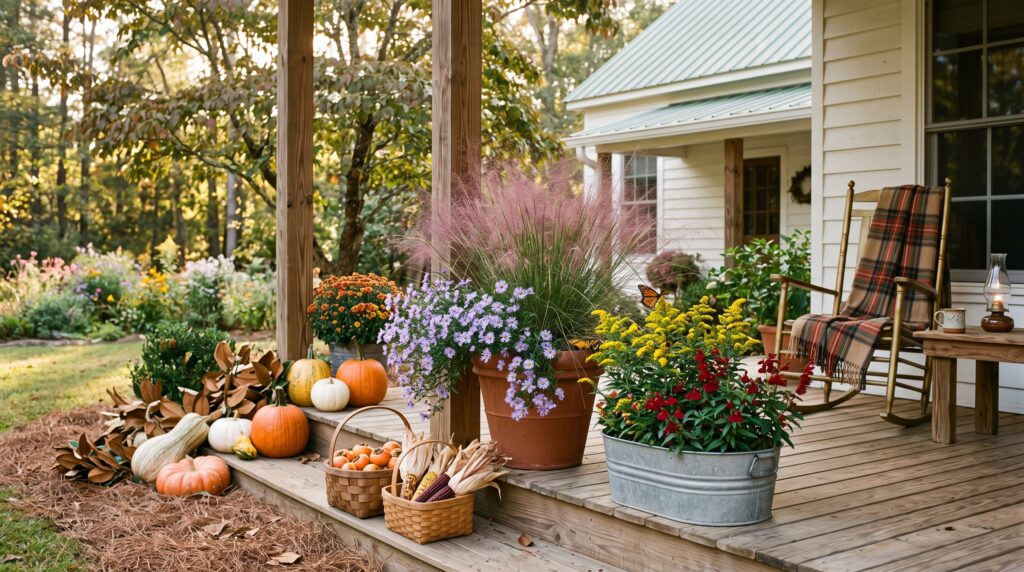
Creating a warm, inviting front entrance is an exercise in Southern hospitality. Follow this simple 5-step styling framework to build a porch display that lasts from September through Thanksgiving:
- Step 1: Choose Timeless Vessels: Trade flimsy plastic planters for aged terracotta, stoneware crocks, or galvanized metal tubs that gain character as they weather.
- Step 2: Apply the “Thriller, Filler, Spiller” Rule: Pair a tall Gulf Muhly grass (Thriller) with deep purple Aromatic Asters (Filler) and cascading Ivy or Creeping Jenny (Spiller) in a shared large pot.
- Step 3: Cluster in Odd Numbers: Arrange pots in groups of three or five near your front doorstep to create visual weight and rhythm.
- Step 4: Incorporate Heirloom Produce: Surround your potted plants with real, edible heirloom winter squash, green hubbard squashes, and textured white pumpkins rather than painted artificial ones.
- Step 5: Light the Threshold: Finish with low-voltage warm copper lanterns or hurricane glasses holding soy pillar candles for an evening welcome.
4. The Spiritual Lesson of Autumn Roots
There is profound spiritual wisdom embedded in the rhythm of fall planting. Above ground, as foliage dies back and colors turn, it looks as though life is shutting down. Yet beneath the soil surface, the most vital work of the year is just beginning: roots are pushing deeper, reaching for hidden nutrients, and anchoring firmly into the earth.
When we take time to cultivate our home landscapes with care and intent, we are reminded that quiet seasons of waiting are never wasted. Just like the native roots settling beneath the autumn soil, our quietest moments of rest, prayer, and family rhythm are often where our greatest strength takes hold.
Frequently Asked Questions (FAQ)
Won’t goldenrod in my fall porch pots trigger my autumn allergies?
No! This is one of the most common plant myths. Goldenrod pollen is heavy and sticky, designed to be carried only by insects. Goldenrod blooms at the exact same time as Ragweed, whose tiny, airborne pollen causes seasonal allergies. Goldenrod gets blamed simply because its bright yellow flowers are more visible!
How often should I water native plants in pots during autumn?
Because air temperatures drop in fall, potted plants dry out much slower than in July. Check the top two inches of soil with your finger; if it feels dry, water deeply until moisture drains from the bottom. Avoid overwatering, as cool nights can cause root rot in soggy soil.